Notes from Antarctica 2004
 I left Cambridge for RAF Brize Norton near Oxford in a chauffeur driven car at 5pm
on February 17. Somewhat to my surprise I was the only person going from the
office on Madingley Road and I assumed that I would be joined by others at the
airport. I didn't see anyone that I recognised as we boarded the British Midland
Airbus where I had an aisle seat for take-off just after 11pm. Once in flight I swapped
to the other side of the aisle where there were three seats between two passengers.
After about 9 hours and a bit of sleep we landed at Ascension Island, a generally
desolate tropical island with several dormant volcanoes and an lava strewn landscape.
For the second leg to the Falkland Islands I found that the original passenger sitting in
the window seat had left, so I had two seats for the rest of the journey. We were
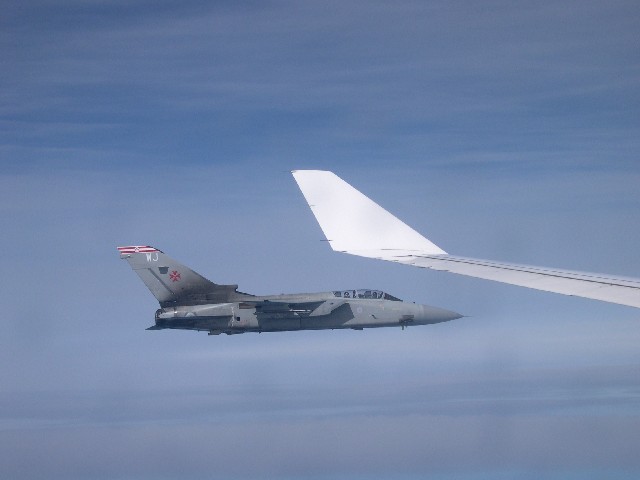
escorted in to Mount Pleasant airport by an RAF Tornado fighter.
I left Cambridge for RAF Brize Norton near Oxford in a chauffeur driven car at 5pm
on February 17. Somewhat to my surprise I was the only person going from the
office on Madingley Road and I assumed that I would be joined by others at the
airport. I didn't see anyone that I recognised as we boarded the British Midland
Airbus where I had an aisle seat for take-off just after 11pm. Once in flight I swapped
to the other side of the aisle where there were three seats between two passengers.
After about 9 hours and a bit of sleep we landed at Ascension Island, a generally
desolate tropical island with several dormant volcanoes and an lava strewn landscape.
For the second leg to the Falkland Islands I found that the original passenger sitting in
the window seat had left, so I had two seats for the rest of the journey. We were
escorted in to Mount Pleasant airport by an RAF Tornado fighter.
 From the airport it is about an hour's bus ride into Stanley, along partially metalled
roads, in a bright atmosphere that was a complete contrast to the winter gloom
of the UK. I was dropped
off at the Goose Hotel according to the driver's instructions, but I found that I was staying
with the Dash 7 aircrew at the other end of the town. As this was closer to the hills
than the Goose, I went out walking to Tumbledown, some five kilometres away.
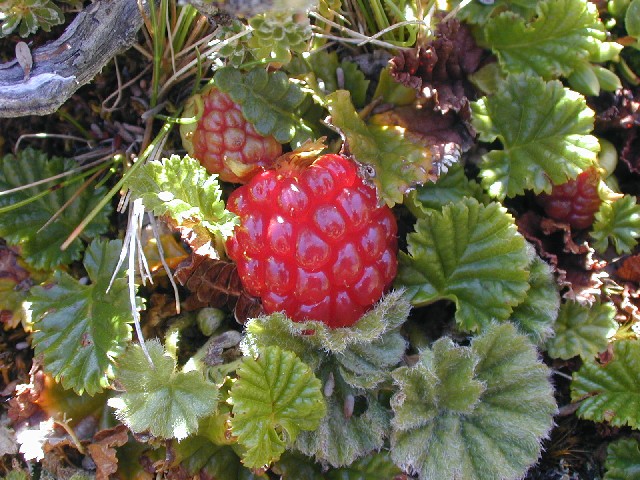
I found some of the local strawberries (which are
actually raspberries) to eat and brought back a few for the others to try. Unusually it
was a calm and pleasant evening, with some breaks in the cloud, so it was an
enjoyable walk. I got back as dusk was falling and although cloud was increasing it
remained clear long enough to make a sighting of a comet that should become quite
bright in May (called comet NEAT or 2001 Q4).
From the airport it is about an hour's bus ride into Stanley, along partially metalled
roads, in a bright atmosphere that was a complete contrast to the winter gloom
of the UK. I was dropped
off at the Goose Hotel according to the driver's instructions, but I found that I was staying
with the Dash 7 aircrew at the other end of the town. As this was closer to the hills
than the Goose, I went out walking to Tumbledown, some five kilometres away.
I found some of the local strawberries (which are
actually raspberries) to eat and brought back a few for the others to try. Unusually it
was a calm and pleasant evening, with some breaks in the cloud, so it was an
enjoyable walk. I got back as dusk was falling and although cloud was increasing it
remained clear long enough to make a sighting of a comet that should become quite
bright in May (called comet NEAT or 2001 Q4).
 The following morning we loaded up the Landrover and all set off for the airport,
where we loaded the plane and I had my passport stamped by the local customs
officer who came up specially – we should have called in on the way past! As there
were only the pilot, co-pilot and myself on board, I had the 'jump seat' in the middle
for the take off and landing, but for the rest of the flight there wasn't much to see and
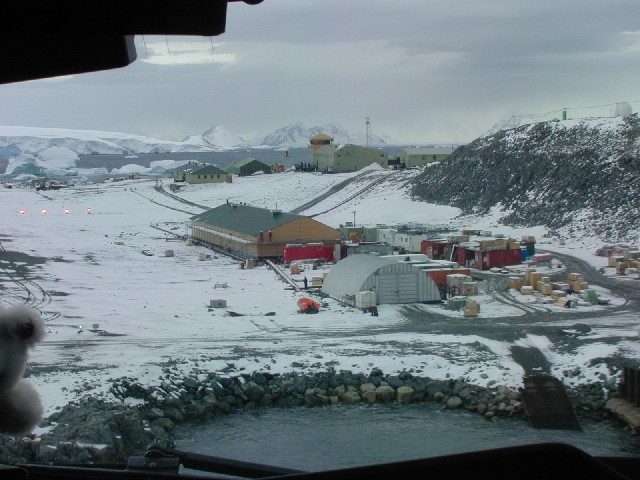
I had my choice of seats in the back. We landed at Rothera in mid afternoon, and
after a briefing I had the chance to begin to get to know everyone. My main task here
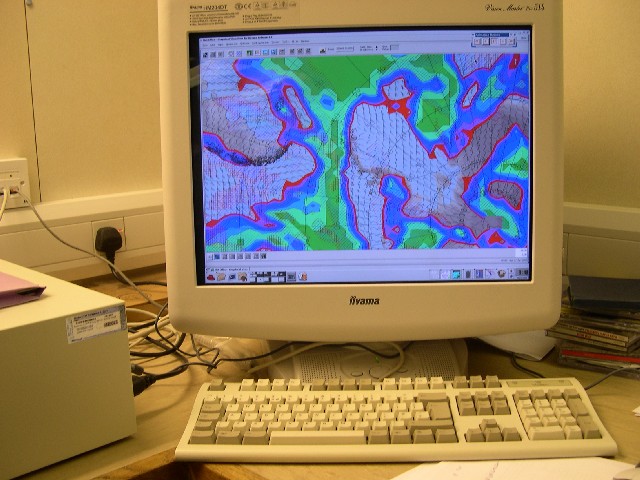
has been to configure a new weather forecast display system for our forecaster.
This takes masses of computer data from the Met Office and displays it on a
computer monitor.
The following morning we loaded up the Landrover and all set off for the airport,
where we loaded the plane and I had my passport stamped by the local customs
officer who came up specially – we should have called in on the way past! As there
were only the pilot, co-pilot and myself on board, I had the 'jump seat' in the middle
for the take off and landing, but for the rest of the flight there wasn't much to see and
I had my choice of seats in the back. We landed at Rothera in mid afternoon, and
after a briefing I had the chance to begin to get to know everyone. My main task here
has been to configure a new weather forecast display system for our forecaster.
This takes masses of computer data from the Met Office and displays it on a
computer monitor.
 My main task for this trip was to install a new state of the art computer system for our
forecaster. This takes in all the details of the computer weather forecasts from
Bracknell (70 Mbytes of data) and displays it in graphical form for the forecaster to
assess what is likely to happen. It can also display images from our satellite ground
station. Whilst this all sounds straightforward it took several weeks of hard work to
get everything functioning just as it should, and I restricted myself to simple
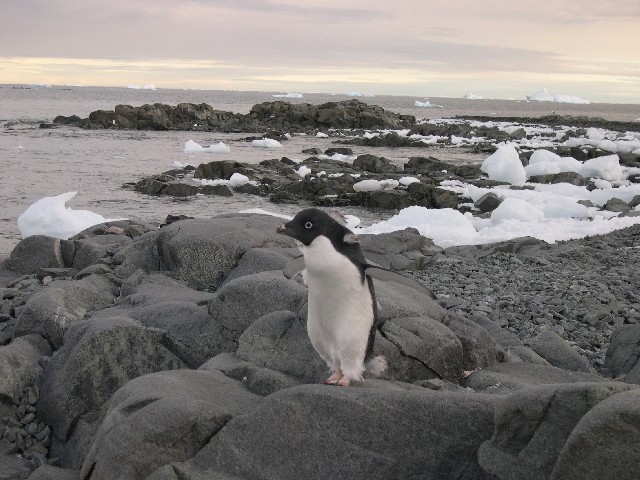
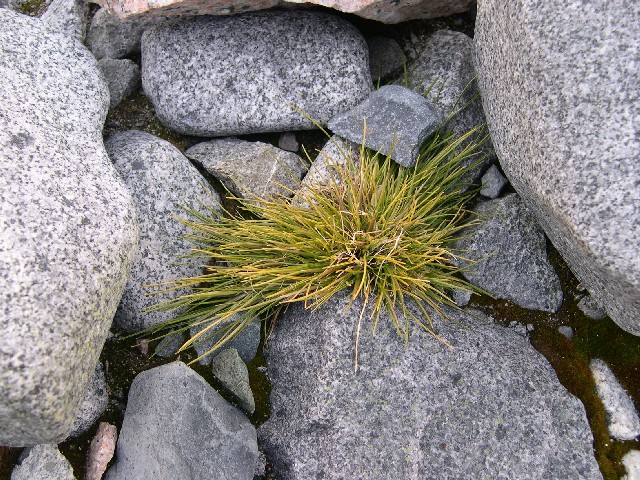
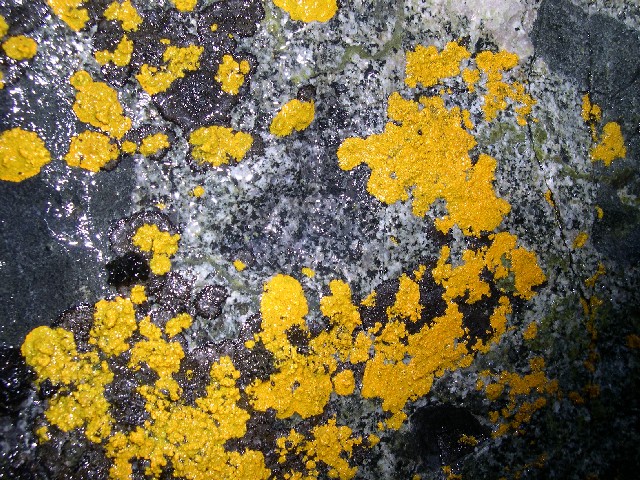
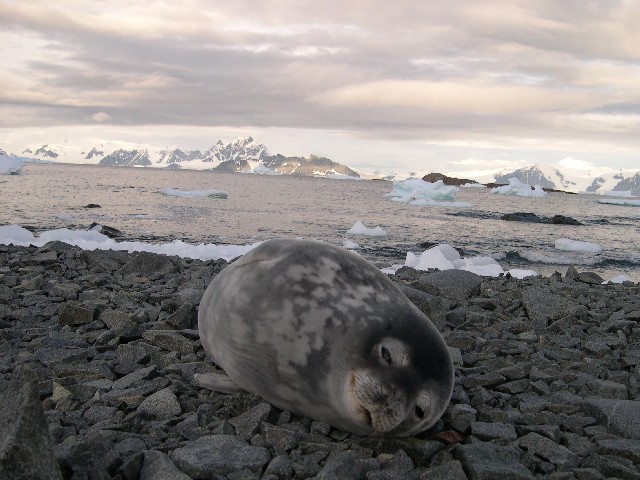
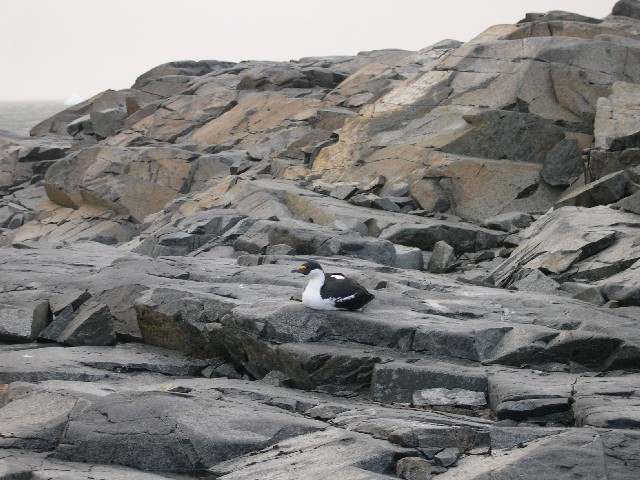
relaxation in walking around the point and counting the number of penguins, seals,
skuas, petrels and shags, and seeing if I could find any grass. The highest penguin
count was 176 Adelies and I found three small patches of grass. I've also see a few
Minke whales and on March 12 we saw a pack of about 30 Orcas a kilometre or more
out to sea.
My main task for this trip was to install a new state of the art computer system for our
forecaster. This takes in all the details of the computer weather forecasts from
Bracknell (70 Mbytes of data) and displays it in graphical form for the forecaster to
assess what is likely to happen. It can also display images from our satellite ground
station. Whilst this all sounds straightforward it took several weeks of hard work to
get everything functioning just as it should, and I restricted myself to simple
relaxation in walking around the point and counting the number of penguins, seals,
skuas, petrels and shags, and seeing if I could find any grass. The highest penguin
count was 176 Adelies and I found three small patches of grass. I've also see a few
Minke whales and on March 12 we saw a pack of about 30 Orcas a kilometre or more
out to sea.
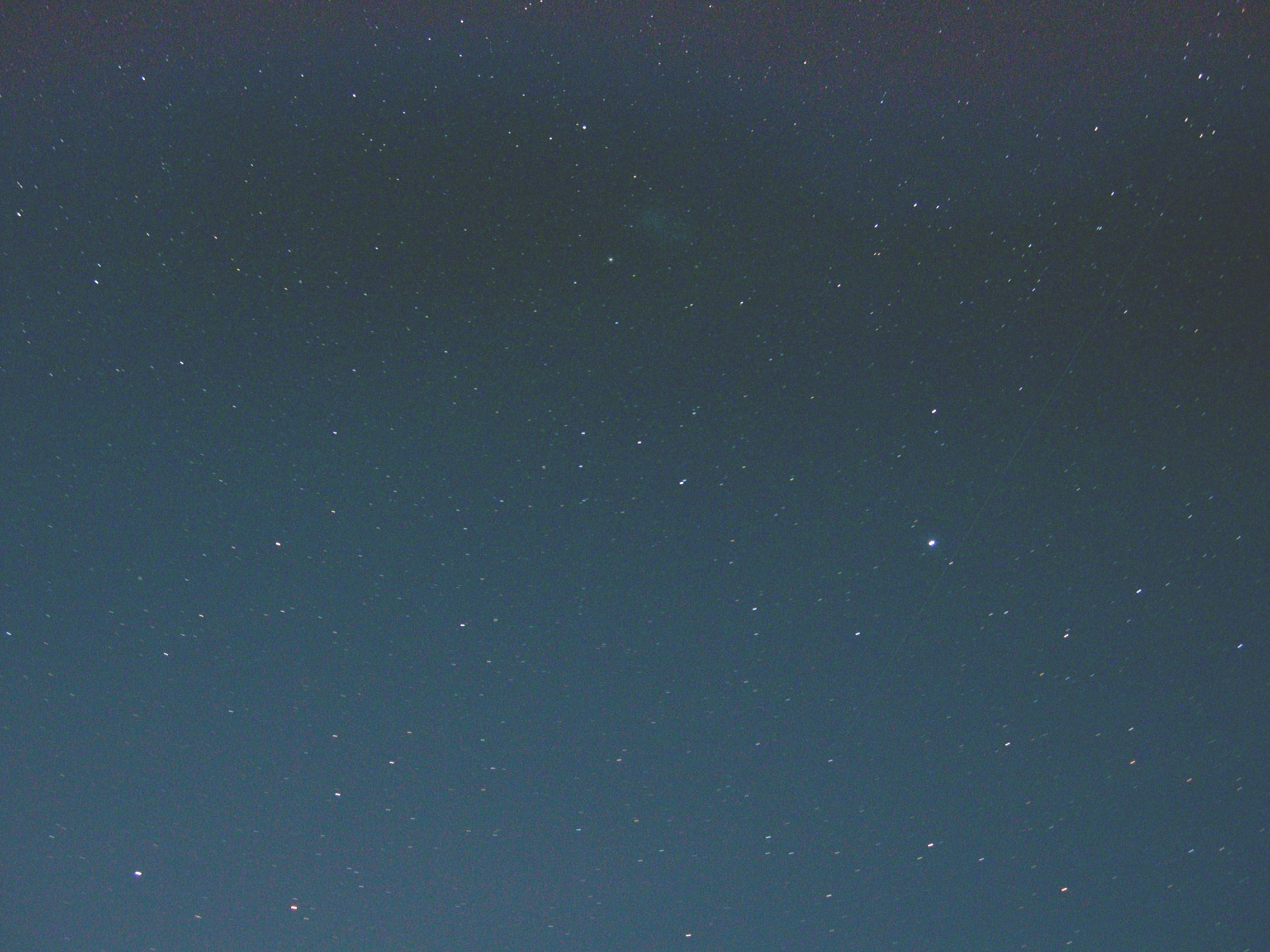
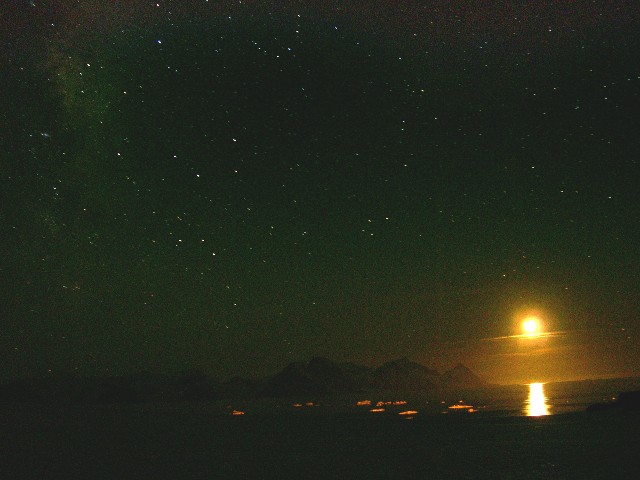
 Generally the weather has been very cloudy, with occasional sunny intervals and very
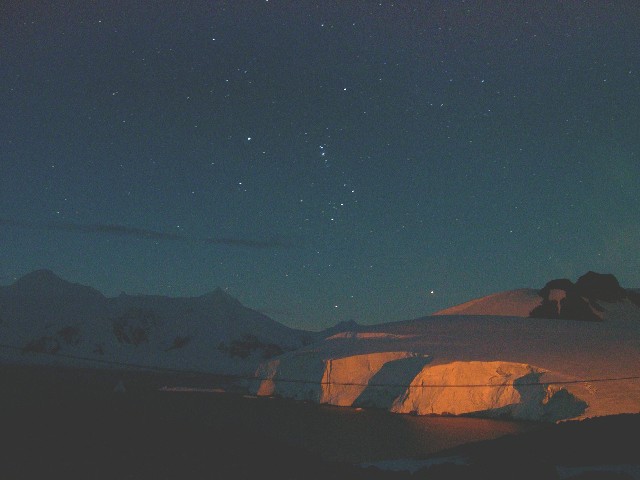
few clear spells at night. One night started off clear and I was able to do some astro
photography with my digital camera, taking pictures of the southern sky. Even at this
remote location we suffer from light pollution, with a badly aimed light illuminating
some ice-cliffs, though it made a picturesque scene with orion setting upside down.
Scorpius and the southern milky way rising in the opposite direction are a spectacular
sight, and close to the small Magellanic cloud was comet 2001 Q4, with a satellite
trail also passing through the field. [The comet is a tiny green blob, only a little larger
than a star, below and to the left of the SMC and to the left of Acherner, image taken on 2004 March 5
at 03:27 UT, the satellite was Cosmos 2151]. Clear skies were forecast for the early
hours of March 16, so I arranged for an early call if this did happen. It cleared
sufficiently for me to observe the comet again, and it was significantly brighter
than it had been. The wind had been blowing at 15 knots, with temperatures of -3,
but it calmed down and I managed to glimpse a faint comet 2003 H1.
Generally the weather has been very cloudy, with occasional sunny intervals and very
few clear spells at night. One night started off clear and I was able to do some astro
photography with my digital camera, taking pictures of the southern sky. Even at this
remote location we suffer from light pollution, with a badly aimed light illuminating
some ice-cliffs, though it made a picturesque scene with orion setting upside down.
Scorpius and the southern milky way rising in the opposite direction are a spectacular
sight, and close to the small Magellanic cloud was comet 2001 Q4, with a satellite
trail also passing through the field. [The comet is a tiny green blob, only a little larger
than a star, below and to the left of the SMC and to the left of Acherner, image taken on 2004 March 5
at 03:27 UT, the satellite was Cosmos 2151]. Clear skies were forecast for the early
hours of March 16, so I arranged for an early call if this did happen. It cleared
sufficiently for me to observe the comet again, and it was significantly brighter
than it had been. The wind had been blowing at 15 knots, with temperatures of -3,
but it calmed down and I managed to glimpse a faint comet 2003 H1.
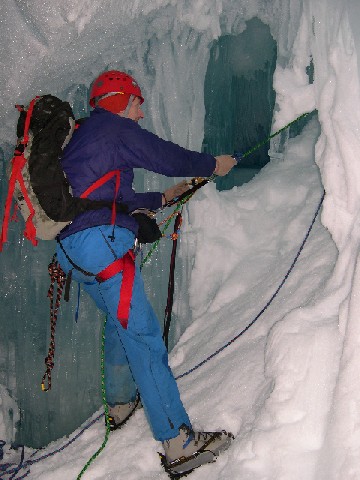
 Sunday afternoons are usually days off, although I mostly kept working for the first
couple of weeks. One
weekend however we had a visitor in the form of the Commander of British Forces in
the Falkland Islands and as he was being taken on a trip down the local crevasse I
volunteered to come too, along with David Lee our forecaster. The visit required
revision of climbing techniques, such as how to abseil and jummar back up again, which
we practiced indoors. We went up to the crevasse on the back of a skidoo, and then
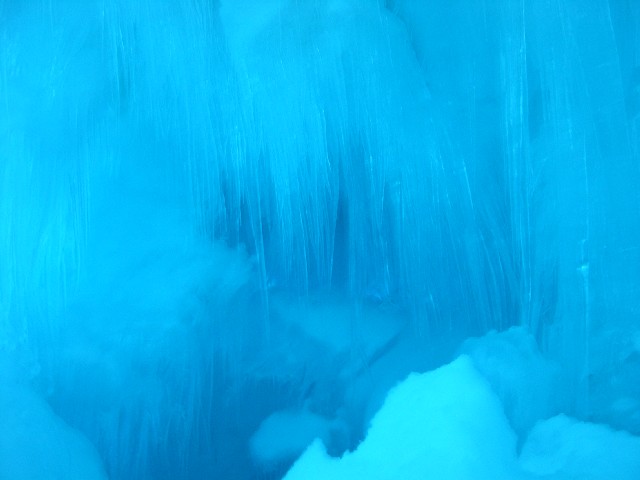
in practice it was just a bit of a scramble down and up a snow slope. Inside
was amazing, with long dripping icicles and a ghostly blue light, which completely
changed the colours of our clothing.
Sunday afternoons are usually days off, although I mostly kept working for the first
couple of weeks. One
weekend however we had a visitor in the form of the Commander of British Forces in
the Falkland Islands and as he was being taken on a trip down the local crevasse I
volunteered to come too, along with David Lee our forecaster. The visit required
revision of climbing techniques, such as how to abseil and jummar back up again, which
we practiced indoors. We went up to the crevasse on the back of a skidoo, and then
in practice it was just a bit of a scramble down and up a snow slope. Inside
was amazing, with long dripping icicles and a ghostly blue light, which completely
changed the colours of our clothing.
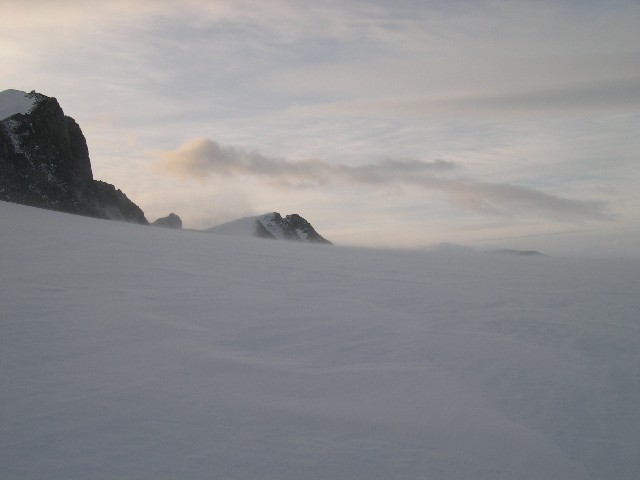
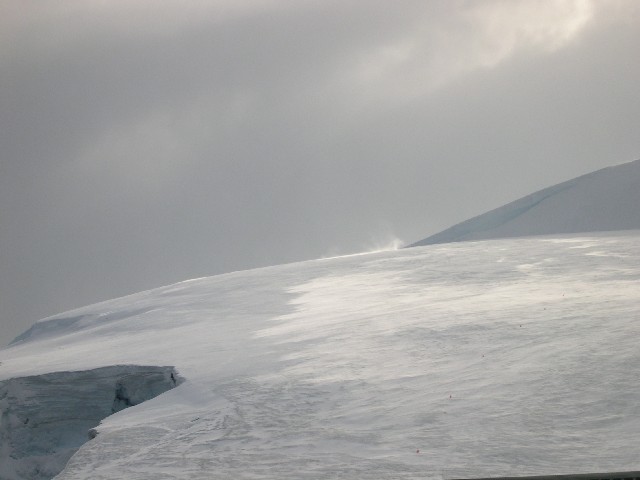
Towards the end of the stay I had completed the majority of my tasks and so on a
couple of occasions I've been out skiing after tea. The first time I went out on cross
country skis, which involves an exhausting herringbone up the ramp (essentially the
end of a glacier) to the more gentle slopes higher up. The second time, on March 12,
I was fitted out with mountaineering skis, which allow you to fit "skins" so that you
can essentially walk up hills, and then at the top you take off the skins, lock the
binding down and off you go. To make this more exciting the wind was blowing at
35 knots, there was drifting snow and by the time I got to the top it was twilight and
the contrast was virtually nil. I did fall down a couple of times! This was followed
by milder weather and all the snow disappeared leaving a very icy surface, but this was
soon covered by a centimetre of fine snow. The ship brought
with it a film crew from the BBC and they have interviewed me twice. The first time
was at the top of the ramp, and they decided that filming me skiing would add
to their footage. This time I didn't fall over on the way down. The interviews
were about the ozone hole and climate change, and other interviews will cover
old British bases. The program will be screened on BBC World and as a Timewatch
special later in the year.
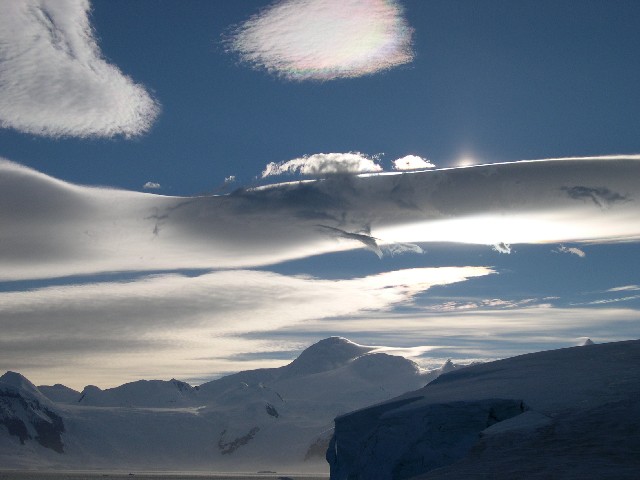
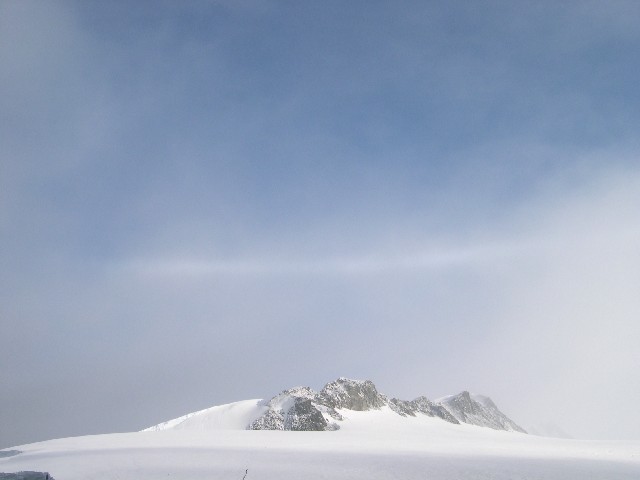
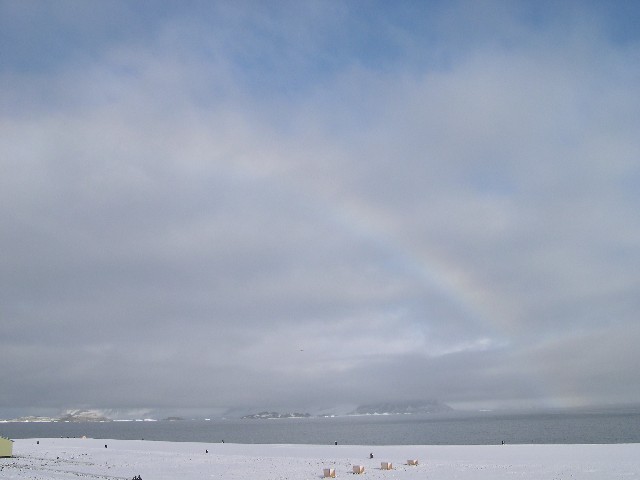
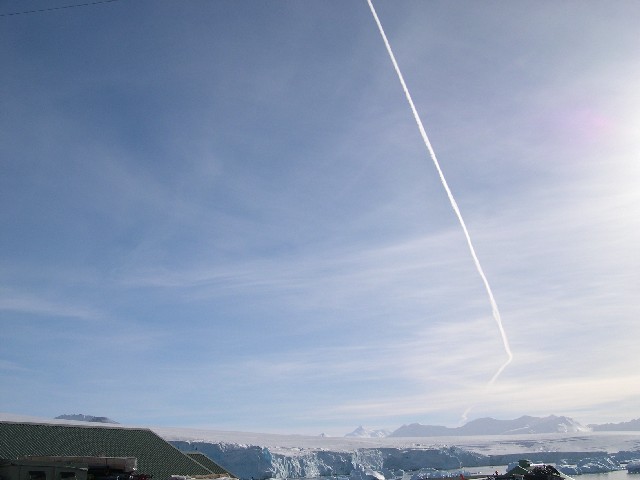 We get a huge variety of weather, and so far there has been heavy rain, sleet, snow,
crystal clear blue skies, fog, and gale force winds, with temperatures ranging from +7
to –2, and averaging a bit above freezing. There is an interesting range of
meteorological phenomena and so far we've a rainbow, a sector of the parehelic circle
at 90ø to the sun, and a sun pillar and irisation in lenticular clouds. On March 16
a NASA DC8 research aircraft, which was engaged in temperature studies of glaciers,
flew overhead and left a contrail that lasted several hours.
We get a huge variety of weather, and so far there has been heavy rain, sleet, snow,
crystal clear blue skies, fog, and gale force winds, with temperatures ranging from +7
to –2, and averaging a bit above freezing. There is an interesting range of
meteorological phenomena and so far we've a rainbow, a sector of the parehelic circle
at 90ø to the sun, and a sun pillar and irisation in lenticular clouds. On March 16
a NASA DC8 research aircraft, which was engaged in temperature studies of glaciers,
flew overhead and left a contrail that lasted several hours.
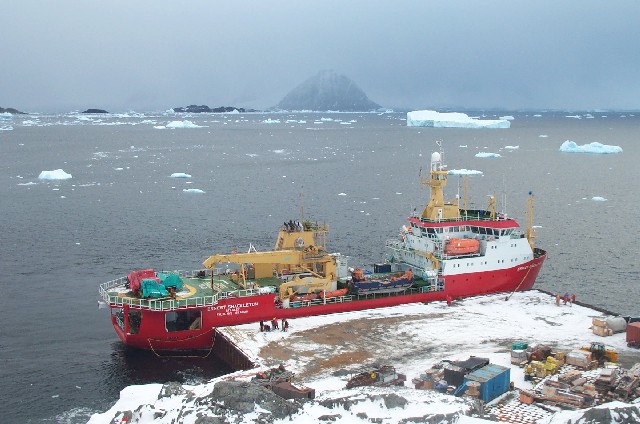
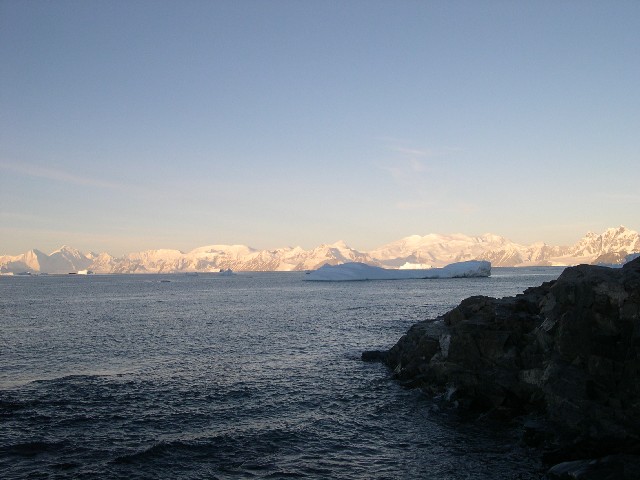
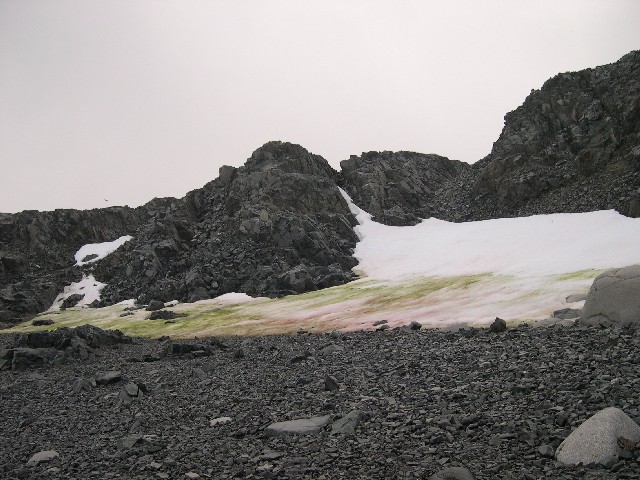 The RRS Ernest Shackleton arrived at Rothera on March 14, though I was the only
one about when she first called up on the radio. Tonnes of cargo have been offloaded
and all the waste loaded aboard for transport out of Antarctica. She
will be here for a few more days before we board her and head north. I'm hoping that it
won't be as windy as March 13, when it is once again blowing at 30 knots, with rain and
snow. Unfortunately our forecaster can see signs that we have 40 knots!
From here we continued north, through the spectacular Lemaire Channel, but then
round the outside of Anvers Island and past Palmer Station. Saturday was pretty
foggy, but satellite images showed some clear areas and my forecast that it
would be clear by 00:00 UT proved correct. This allowed me to view the comet
(now a little brighter) and the nova (now fainter), but the decks were very
icy and I decided not to get the ship's company out to see the sights of the
Southern sky, despite the fact that it was virtually calm.
The RRS Ernest Shackleton arrived at Rothera on March 14, though I was the only
one about when she first called up on the radio. Tonnes of cargo have been offloaded
and all the waste loaded aboard for transport out of Antarctica. She
will be here for a few more days before we board her and head north. I'm hoping that it
won't be as windy as March 13, when it is once again blowing at 30 knots, with rain and
snow. Unfortunately our forecaster can see signs that we have 40 knots!
From here we continued north, through the spectacular Lemaire Channel, but then
round the outside of Anvers Island and past Palmer Station. Saturday was pretty
foggy, but satellite images showed some clear areas and my forecast that it
would be clear by 00:00 UT proved correct. This allowed me to view the comet
(now a little brighter) and the nova (now fainter), but the decks were very
icy and I decided not to get the ship's company out to see the sights of the
Southern sky, despite the fact that it was virtually calm.
Sunday morning dawned with with much stronger winds and snow, putting our
planned pickup of a party of Germans on hold. Sunday is cleaning day for
everyone and I
was also on "gash", which means cleaning all the mess rooms and do the
washing up in the galley. There were four of us on duty, and with a very
enthusiastic steward (Julia) it wasn't too arduous. The wind eased in the
afternoon and so the humbers made the pick-up at Jubany station, in a
spectacular setting of an eroded volcanic pipe.
I'm now back in Cambridge, but more pictures and text will be added when I can
find the time to do so.
Jonathan Shanklin
2004 May 19